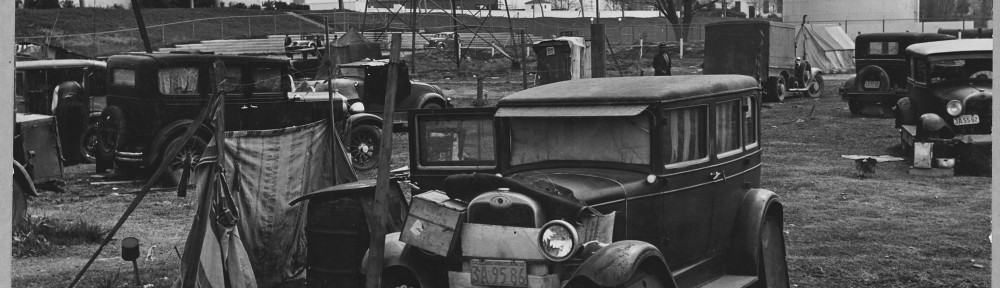
Before The Great Depression, problems relating to mass production and World War I in the economy added to each other and in the end caused the depression. Many of these problems occurred in the decade before the depression occurred in the decade before the depression during a time known as the Roaring Twenties (McElvain). On the surface, the Roaring Twenties was a time of prosperity, however; there were many problems hidden below the surface (McElvain). One of the main problems was that World War I was a very expensive war and was a major setback for the United States’ economy. (McElvain). In addition, mass production let a higher standard of living into reach of more people (McElvain). While mass production did create a higher standard of living for many people, it also created an affect that people “had” to buy what came off the assembly line (McElvain). This happened because the people could afford it, and they needed to have the latest product. The one problem with this system is that the profits of mass production went to the factory owners or investors, not the workers (McElvain). Consequently, people did not have enough money to sustain themselves (McElvain). To fix this problem, people used a thing called “credit” (McElvain). Credit was extremely similar to credit cards that we use today. Just like in more recent times times, people went into debt because they bought things they could not really afford (McElvain). Following this further, in 1929 consumers stopped buying products, even on credit, because they were in too much debt (McElvain). Industrial production in the U.S. fell nearly fifty percent (McElvain). Accordingly, goods piled up in warehouses (McElvain). All of these events caused a cycle of bad events taking place (McElvain). The factories produced less and laid off workers, but then, the people without jobs could not buy anything else, so the factories were not selling products. Then, the producers laid off workers and the process repeated, until most people who used to work at the factories could not even afford the basic needs for life. All in all, the the problems that people did not see until they took an affect in the economy led to the depression.
The Great Depression
Noah Silverstein