World War II begins.
Author Archives: noah
Change in Government
Franklin Roosevelt became president.
People and Jobs in The Great Depression
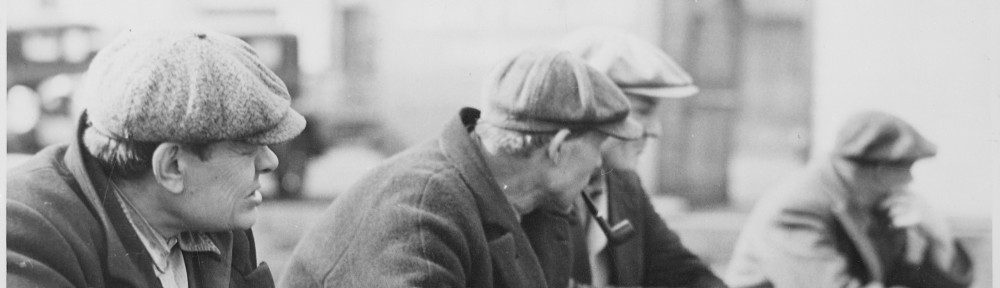
Many families went through a time of hardship during the depression. To start off, one of the main problems was that thirteen to fifteen million workers did not have jobs (Taylor). By 1932, the unemployment rate passed 20 percent (Taylor). The unemployment rate went from about 4 percent to at least 24 percent from the beginning of the depression ,in 1929, to the worst in the mid-1930s (McEvaine). Most of the people who lost their jobs did not have enough money to pay for rent, so they lost their homes. Consequently, millions of people were homeless during the depression (Taylor). Many homeless families during the Depression, lived in camps called Hoovervilles. (“Great Depression”). The term “Hooverville” was named after the president at the beginning of the depression, Herbert Hoover. The camps were named after the president because the people thought that he was not doing what he should to try and stop the depression. The horrible affects of the depression lasted longer because the government was uninvolved (Thorkelson). In 1933, a new president came into office, Franklin D. Roosevelt (FDR) (Thorkelson). Franklin D Roosevelt created jobs and did his best to end the depression. One of the worst effects of the depression was that there was not enough public aid but, when FDR became president the public started seeing more help from the government. (Thorkelson). To make it even harder on families in the depression, over 30 percent of the banks failed (McEvaine). As a result, when the banks closed, it wiped out the life savings of the depositors (McEvaine). Furthermore, during the depression there was one of the worst droughts in history, known as the Dust Bowl (“Great Depression”). The Dust Bowl wiped out millions of crops and led many people to lose everything. To conclude, with such low unemployment rates many people in the depression had very hard life and had to suffer through bleak times.
The Stock Market in The Great Depression
During the Great Depression, stocks fell tremendously. One of the largest problems was the stock market crash of 1929, it is is now called “Black Tuesday” (Taylor). Its name reflects how tragic the day was. Black Tuesday took place on October 29, 1929 (Taylor). Moreover, on that disastrous day, stocks fell almost 23 percent, and the market lost eight to nine billion dollars in value (Taylor). Consequently, during the depression there was an 89 percent decrease in stock prices (Taylor). This resulted in many people losing stocks, which they may have invested in or been dependent. When people lost their investments, and the banks could not let them take out money, they started running out of money and could not afford things like their rent or food for their family. After a long period of hardship, the stock market regained its normal (pre-depression) levels in 1954 (Taylor). To sum up, the depression brought a great loss for the stock market and to stock investors.
The Economy in and After The Great Depression
The Great Depression brought extreme hardship on the economy. For many people, the standards of living dropped (“Great Depression”). Additionally, a decline in consumer demand, financial panic, and misguided government policies caused economic output to fail (“Great Depression”). Furthermore, as much as one fourth of the labor force, in the 1930’s, was not able to find jobs (“Great Depression”). The downfall led to significant changes in economic policies later on in history (“Great Depression”). In the late 1930s, conditions improved (“Great Depression”). After the U.S. entered the war in 1941 unemployment fell, and WWII brought the depression to an end (Thorkelson; Taylor). World War II also eliminated banking panics (“Great Depression”). Now, legislatures and banks try to prevent recessions (“Great Depression”). In conclusion, The Great Depression brought hardship on the economy.
Affects of The Great Depression
The Great depression caused changes in the United States economy, culture, and government. During the depression, “more that fifteen million people were unemployed” (McElvaine). Jobs were hard to find and food was scarce. “Large numbers of Americans were reduced to waiting in breadlines for food handouts” (McElvaine). In addition, after the depression there was a political shift (Thorkelson). Before the depression all but two of the presidents ever in office were republicans (Thorkelson). When the Democrat Franklin D. Roosevelt became president and helped end the depression with his new policies, people began to think more of Democrats. “For several decades thereafter, Democrats usually controlled the federal government” (Thorkelson). Furthermore, after the depression many countries ,including the United States, created new regulations of the economy (“The Great Depression”). “The United States, for example, established the Securities and Exchange Commission (1934) to regulate new stock issues and stock market trading practices” (“The Great Depression”). All in all, the depression had a major affect on the economy, culture and government of the United States.
Cause of The Great Depression
Many think the depression was caused by the stock market crash of 1929, but actually, the depression was mainly caused by underlying problems and an imbalance in the economic structure (Thorkelson). In addition, in the fall of 1930, banking panics started to arise (“Great Depression”). Most banks only had a fraction of what their customers deposited, but when all the banks clients wanted the money in their accounts, the banks had a serious problem (“Great Depression”). Because the banks did not have enough money, many customers never got their money out of the bank. Moreover, in the mid-1920s, the United States lent money to Germany and Latin America, but in 1928 the lending decreased (“Great Depression”). This caused the countries that needed the money to decline output for trading (“Great Depression”). To summarize, problems across the world started to arise partially cause the depression.
Before The Great Depression, problems relating to mass production and World War I in the economy added to each other and in the end caused the depression. Many of these problems occurred in the decade before the depression occurred in the decade before the depression during a time known as the Roaring Twenties (McElvain). On the surface, the Roaring Twenties was a time of prosperity, however; there were many problems hidden below the surface (McElvain). One of the main problems was that World War I was a very expensive war and was a major setback for the United States’ economy. (McElvain). In addition, mass production let a higher standard of living into reach of more people (McElvain). While mass production did create a higher standard of living for many people, it also created an affect that people “had” to buy what came off the assembly line (McElvain). This happened because the people could afford it, and they needed to have the latest product. The one problem with this system is that the profits of mass production went to the factory owners or investors, not the workers (McElvain). Consequently, people did not have enough money to sustain themselves (McElvain). To fix this problem, people used a thing called “credit” (McElvain). Credit was extremely similar to credit cards that we use today. Just like in more recent times times, people went into debt because they bought things they could not really afford (McElvain). Following this further, in 1929 consumers stopped buying products, even on credit, because they were in too much debt (McElvain). Industrial production in the U.S. fell nearly fifty percent (McElvain). Accordingly, goods piled up in warehouses (McElvain). All of these events caused a cycle of bad events taking place (McElvain). The factories produced less and laid off workers, but then, the people without jobs could not buy anything else, so the factories were not selling products. Then, the producers laid off workers and the process repeated, until most people who used to work at the factories could not even afford the basic needs for life. All in all, the the problems that people did not see until they took an affect in the economy led to the depression.
Stock Market Crash
During the Great Depression, stocks fell tremendously. One of the largest problems was the stock market crash of 1929, it is is now called “Black Tuesday” (Taylor). Its name reflects how tragic the day was. Black Tuesday took place on October 29, 1929 (Taylor). Moreover, on that disastrous day, stocks fell almost 23 percent, and the market lost eight to nine billion dollars in value (Taylor). Consequently, during the depression there was an 89 percent decrease in stock prices (Taylor). This resulted in many people losing stocks, which they may have invested in or been dependent. When people lost their investments, and the banks could not let them take out money, they started running out of money and could not afford things like their rent or food for their family. After a long period of hardship, the stock market regained its normal (pre-depression) levels in 1954 (Taylor). To sum up, the depression brought a great loss for the stock market and to stock investors.
Events Leading Up To The Great Depression
Before The Great Depression, problems relating to mass production and World War I in the economy added to each other and in the end caused the depression. Many of these problems occurred in the decade before the depression occurred in the decade before the depression during a time known as the Roaring Twenties (McElvain). On the surface, the Roaring Twenties was a time of prosperity, however; there were many problems hidden below the surface (McElvain). One of the main problems was that World War I was a very expensive war and was a major setback for the United States’ economy. (McElvain). In addition, mass production let a higher standard of living into reach of more people (McElvain). While mass production did create a higher standard of living for many people, it also created an affect that people “had” to buy what came off the assembly line (McElvain). This happened because the people could afford it, and they needed to have the latest product. The one problem with this system is that the profits of mass production went to the factory owners or investors, not the workers (McElvain). Consequently, people did not have enough money to sustain themselves (McElvain). To fix this problem, people used a thing called “credit” (McElvain). Credit was extremely similar to credit cards that we use today. Just like in more recent times times, people went into debt because they bought things they could not really afford (McElvain). Following this further, in 1929 consumers stopped buying products, even on credit, because they were in too much debt (McElvain). Industrial production in the U.S. fell nearly fifty percent (McElvain). Accordingly, goods piled up in warehouses (McElvain). All of these events caused a cycle of bad events taking place (McElvain). The factories produced less and laid off workers, but then, the people without jobs could not buy anything else, so the factories were not selling products. Then, the producers laid off workers and the process repeated, until most people who used to work at the factories could not even afford the basic needs for life. All in all, the the problems that people did not see until they took an affect in the economy led to the depression.