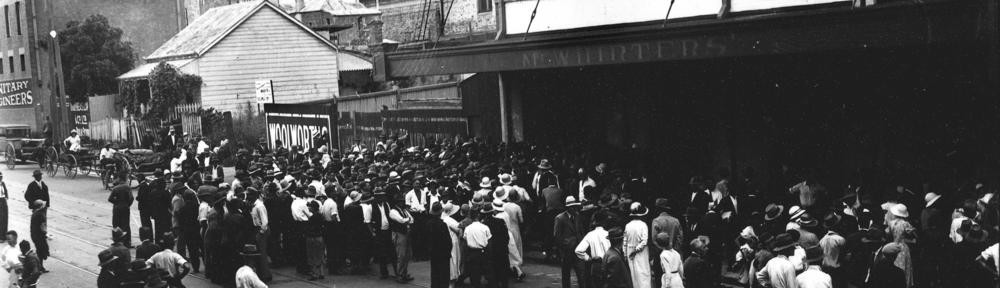
During the Great Depression, stocks fell tremendously. One of the largest problems was the stock market crash of 1929, it is is now called “Black Tuesday” (Taylor). Its name reflects how tragic the day was. Black Tuesday took place on October 29, 1929 (Taylor). Moreover, on that disastrous day, stocks fell almost 23 percent, and the market lost eight to nine billion dollars in value (Taylor). Consequently, during the depression there was an 89 percent decrease in stock prices (Taylor). This resulted in many people losing stocks, which they may have invested in or been dependent. When people lost their investments, and the banks could not let them take out money, they started running out of money and could not afford things like their rent or food for their family. After a long period of hardship, the stock market regained its normal (pre-depression) levels in 1954 (Taylor). To sum up, the depression brought a great loss for the stock market and to stock investors.
The Great Depression
Noah Silverstein